
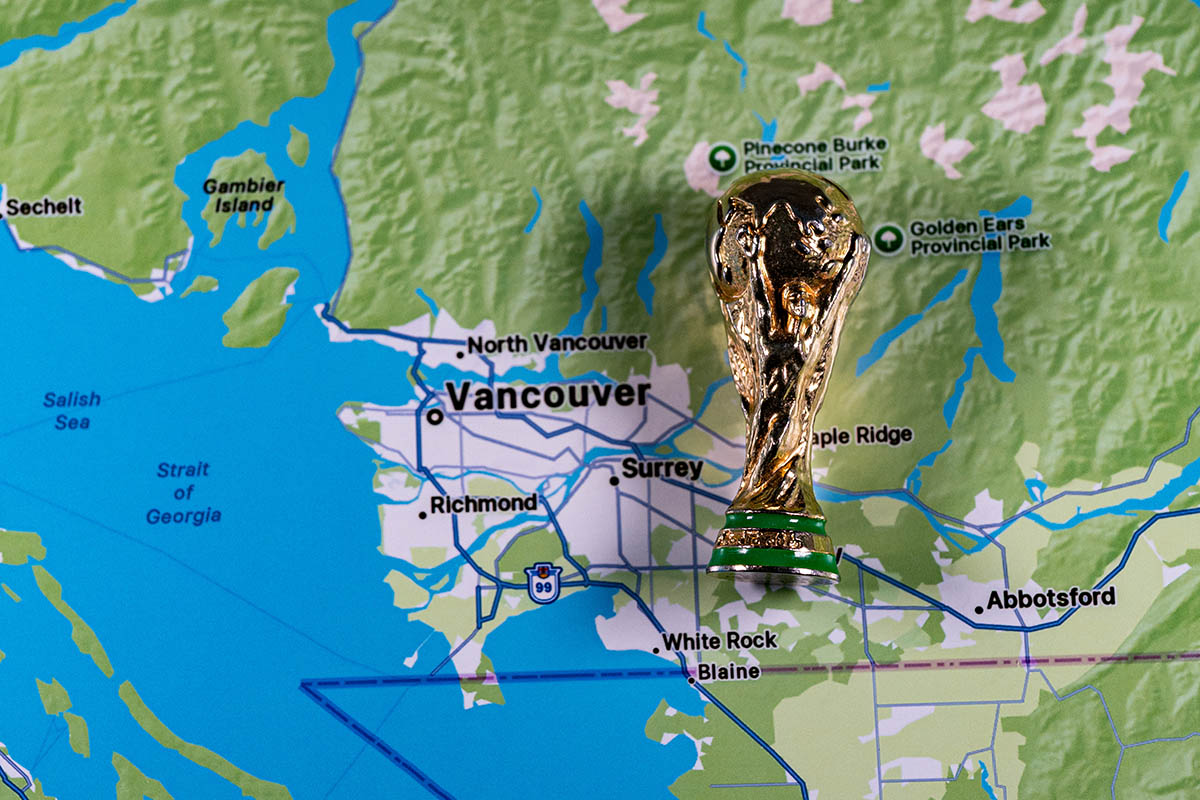
During the May UNA Board meeting, the commander of the University RCMP detachment notified directors that additional RCMP officers will be deployed on campus at two main sites to help manage the temporary influx of visitors that is expected to occur during the 2026 FIFA World Cup.
The two sites, whose locations were not disclosed, have been secured for the expanded police presence, which will also include the regular flying of police drones, directors were told.
The Canadian men’s squad will be participating in the tournament and have their home base on campus at the National Soccer Development Centre, which is located at the UBC sport complex in central campus.
The availability of parking throughout campus will also be affected, the commander said.
The World Cup runs from June 11 to July 19, with seven games scheduled to be played in Vancouver.
Team Canada will be playing two opening round matches at B.C. Place, with a match against Qatar on June 18 and a second match against Switzerland scheduled for June 24.
Water restrictions in effect
For the first time, Metro Vancouver has entered directly into Stage 2 water restrictions at the start of the season, noted Electoral Area A Director Jen McCutcheon in her monthly report, which was included in the meeting’s agenda.
The restrictions came into effect on May 1, and come as a result of a low snowpack, a dry weather forecast, and the decommissioning of the First Narrows Crossing water pipe, which is scheduled to be replaced by the new Stanley Park Water Supply Tunnel.
Under Stage 2 restrictions, all residential and non-residential lawn watering and the filling of decorative water features including ponds and fountains are banned.
During discussion, director Michael Kerns inquired how much water is used for Wesbrook Place’s neighbourhood water features, and whether the restrictions will be followed.
In response, UNA staff said they did not have water consumption information at hand, and said any decision on following Metro Vancouver’s restrictions would be made by UBC Properties Trust, which currently manages the water features.
In late May, Metro Vancouver said expanded Stage 3 water restrictions are imminent and could be introduced this month. The expanded restrictions would result in the banning of outdoor car washing and the refilling of private pools and saunas.
Emerald ash borer management plan
During the board meeting, UNA directors unanimously voted to adopt a more aggressive management strategy for Hampton Place’s ash trees, which are susceptible to infestation from the invasive emerald ash borer.
The emerald ash borer (EAB) – an invasive species native to north-eastern Asia – was found six kilometres from Hampton Place in late 2025. Because 79 out of the 83 trees in the neighbourhood are vulnerable ash trees, UNA staff requested that directors adopt the expanded strategy.
Under the expanded scenario, a systemic program of botanical insecticide treatments will be used on select ash trees in the neighbourhood to deter infestations for an initial 15-year period.
This initial intensive program will transition into a more passive phase with less frequent insecticide treatments and the possible usage of natural deterrents against the ash borer, including natural predators.
Simultaneously, the UNA will replace unhealthy ash trees with new trees while also preserving healthy ones. Between the growth of new trees and the removal of selective ash trees, bridge trees will be planted to smooth the canopy transition.
The expanded scenario is projected to cost $774,000 over the course of 50 years, while a more limited scenario, which does not include the planting of bridge trees and has a smaller insecticide treatment scope, is estimated to cost $709,000.
The board has set a June starting date for the first treatments.
DANIEL LI IS A FORMER STUDENT OF UNIVERSITY HILL SECONDARY AND IS PURSUING A BACHELOR DEGREE AT THE UNIVERSITY OF TORONTO.