
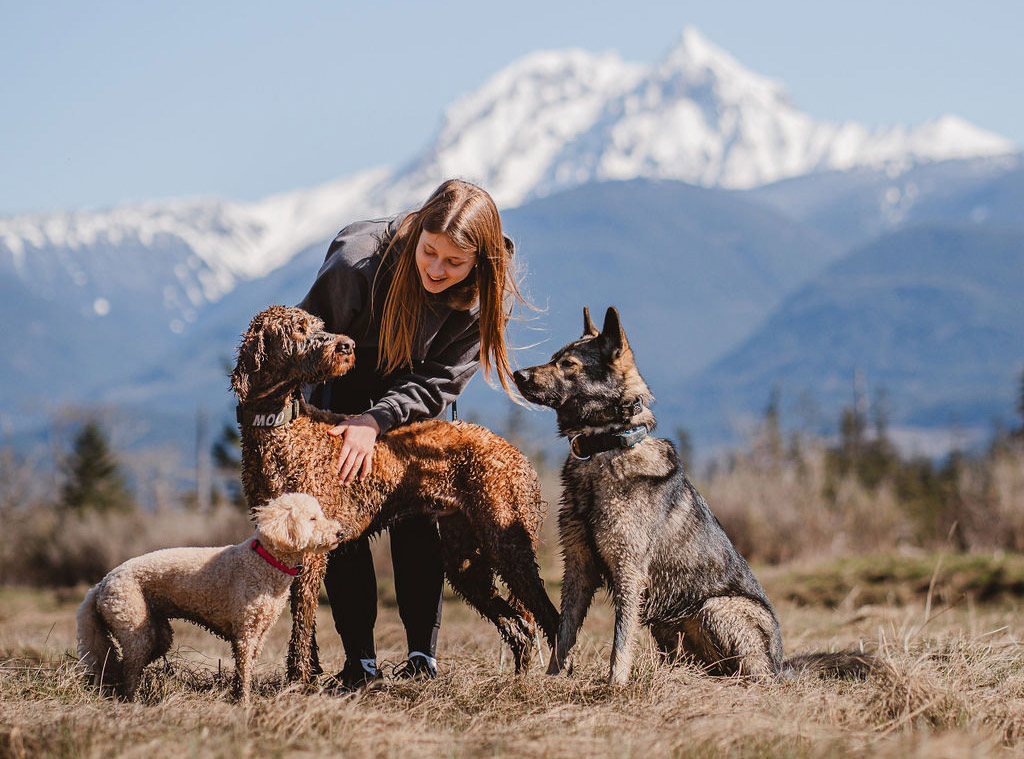
A campus resident is using the tragic experience of losing her mother to cancer at a very young age to help others who are grappling with the tragedy of losing a loved one.
Avery Kirstiuk, 23, studies food, nutrition, and health at UBC, and uses therapy dogs to help people deal with grief and loss.
It’s work that she is intimately tied to after her mother lost a battle with colon cancer when she was just 4 years old, but the experience also led her to discovering that man’s best friend can be there in the darkest moments.
Kirstiuk is an avid lover of dogs and has three herself: ‘Moo’, a “classic, found in a parking lot mutt”, a Tamaskan named ‘Quest’ who was there for her during a recent academic leave due to health issues, and an elderly 13-year-old Mini Poodle named Happy.
Her introduction to therapy dog work began when she was five-years-old and connected deeply with a therapy puppy at the time.
Later in life, she started volunteering with her dogs and working with a dog trainer at a hospital and a drug and addiction center in the province.
She was able to take that experience and bring it to a charity called Camp Kerry, which was started by her father Bob Kirstiuk and Heather Mohan, a registered clinical counsellor and certified music therapist.
The camp, named after her mother, was set up with donations from her celebration of life service, and has since served thousands of families, including Kirstiuk’s, from coast to coast through organized camping trips that connect people dealing with loss. It is now part of the Lumara Grief and Bereavement Care Society.
Kirstiuk has been bringing in her therapy dogs to Lumara’s programs, including a current program for children in New Westminster.
Through her work, she has learned there are some children who have a difficult time opening up about how their loss has impacted their life, and speaking to a therapist or peers doesn’t come easy for them.
“When I started bringing the dogs in, those kids that have those walls up, typically they’ll gravitate to the dogs,” says Kirstiuk. “And there’s always a couple that will end up eventually letting the walls kind of melt away and talk to the dogs about their feelings, their stories.”
“It’s a nice way to sort of get through to those more reluctant kiddoes to talk about how they’re feeling and how their loss has impacted them.”
Kirstiuk graduates this month and looking ahead at career opportunities, she is exploring an idea that combines her education and the experience she has gained through her charitable work.
“I’m really interested in potentially going into canine nutrition and learning a little bit more about that and how I can optimize my dog’s health and extend (his) working timelines to be able to continue to reach the community.”
“Once he retires, it’s going to be some time before getting and training another puppy. It’s a long, long process.”
For Kirstiuk, using her therapy dogs and working with kids dealing with grief is a deeply rewarding one on a very personal level.
“I’ve put a lot of work into my dogs and their ability to connect with people, especially kids, so it’s very emotional,” she says.
“It’s incredibly rewarding. I see myself in a lot of the kids that I work with now.”
EMMANUEL SAMOGLOU IS THE MANAGING EDITOR OF THE CAMPUS RESIDENT.