
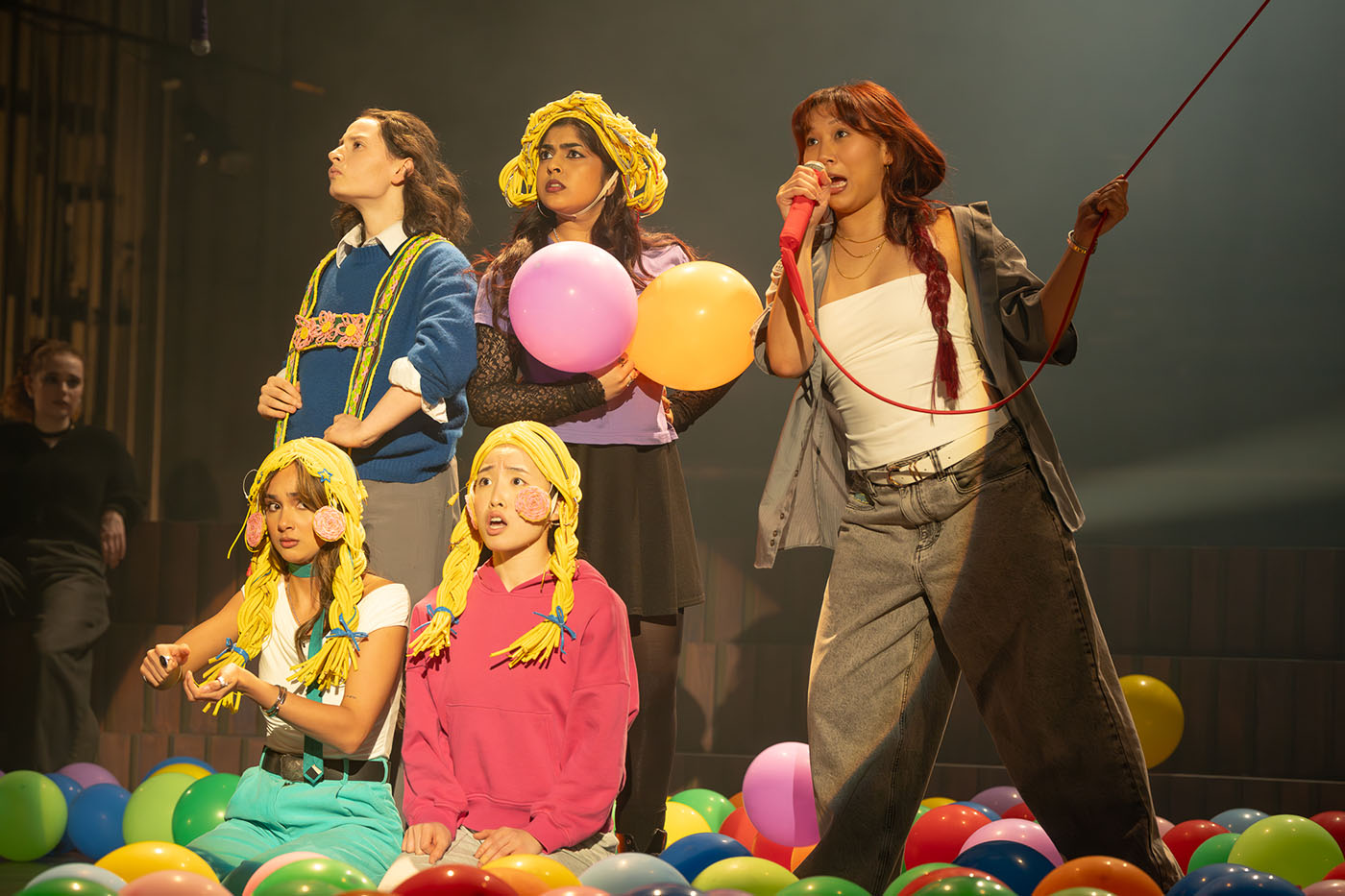
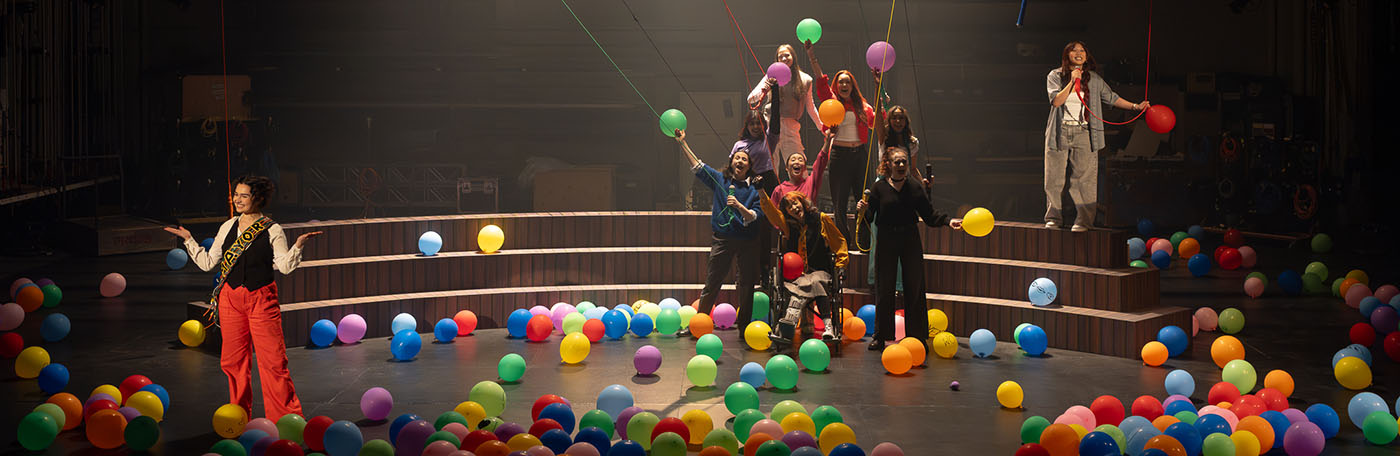
A confusing kaleidoscope of teenage angst and technological grievance, Pyper aspires to adapt the form of the medieval farce to critique the pervasive grasp of modern algorithms but is ultimately dragged down from its goal by a jumbled structure and scattered message.
The UBC Theatre and Film production, written by Susanna Fournier and directed by Leora Morris ran from March 11-18 at the Frederic Wood Theatre.
The plot of Pyper centers around a group of cybernetic teens as they craft a time capsule that proves their existence right before their graduation ceremony in which they are to be “retired”.
Drawing upon a post-modern approach in which the time capsule itself is a play directed by the teens, it creates a play-within-a-play effect. However, the fourth wall between the audience and characters is frequently broken, as Pyper swaps between the teens, the story of their creation at the hands of an Italian puppet maker, and an allegorical retelling of the Pied Piper of Hamelin.
While the play seeks to interweave these three major plot lines into a sophisticated indictment of the information age, frequent switching between the three scenes and sometimes unclear divisions between them contribute to the scrambled structure that lends itself more to confusion than profundity.
Compounding this issue was the scattered nature of the themes that the play sought to convey.
Broadly focusing on being human in the age of artificial intelligence and binary, the addition of little vignettes that cover themes of mental illness, political cynicism and xenophobia – accentuated with a standout performance from Rachele Rutherford as the anxiety-stricken Mayor of Hamlin – serves to broaden the scope of Pyper’s messaging.
However, these additions serve to overly stretch the thematic strength of the play and distract from the more coherent message of the importance of humanity in the age of technology.
The set design was simplistic with microphones attached to colored nooses hanging from the ceiling above a threestepped podium. The sound design and lightning both played a large role in accentuating the technological themes of Pyper with pleasant digital chimes complemented by red and blue notification-like colors.
Ultimately, while Pyper seeks to serve as a multifaceted J’accuse of the modern age, it loses much of its power from a confusing structure and overworked message.
DANIEL LI IS A GRADE 12 STUDENT PASSIONATE ABOUT POLITICS AND JOURNALISM.