
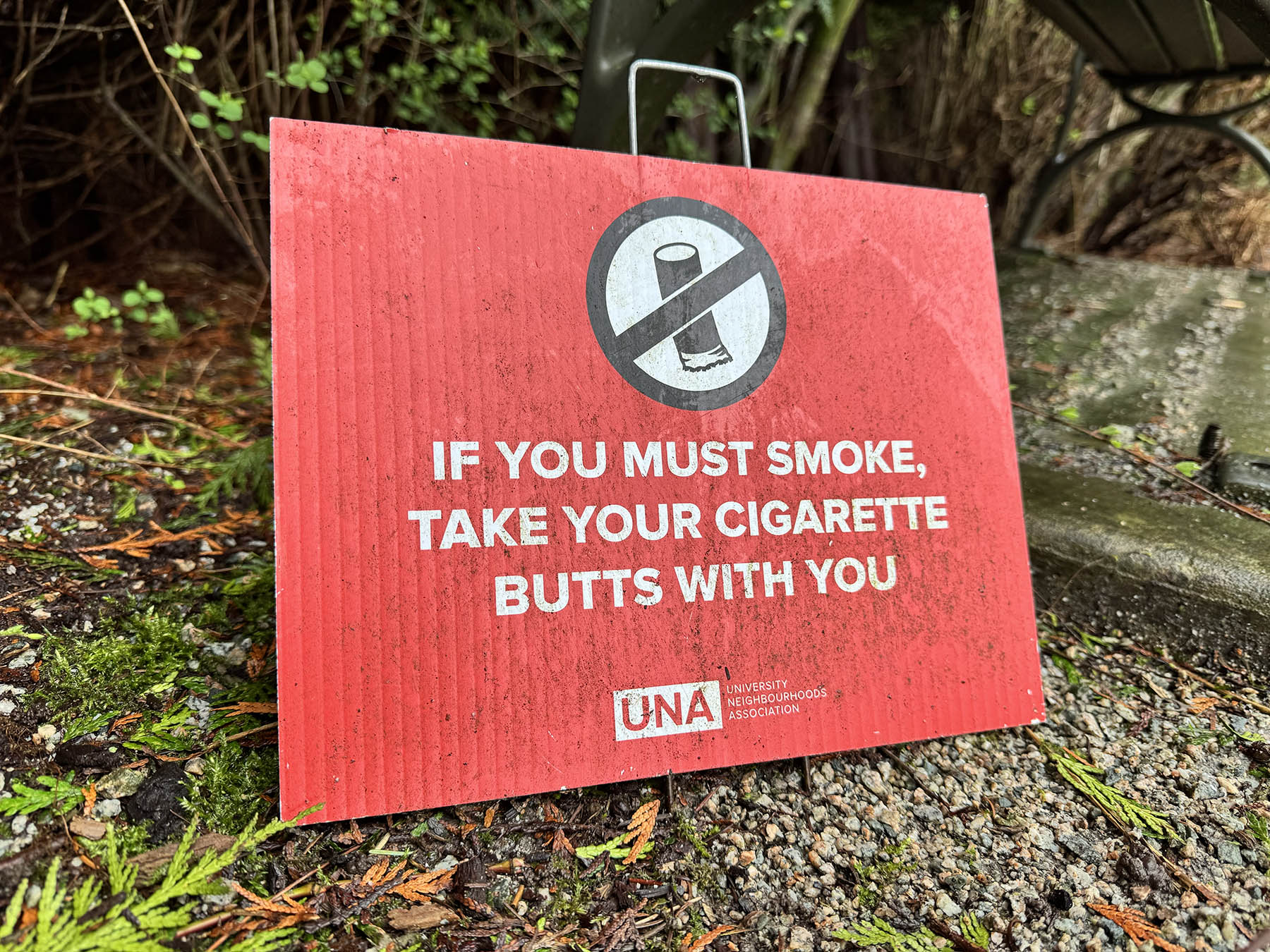
Longtime campus residents will have noticed an increase in the pungent, musky scent of cannabis smoke since its legalization in October 2018.
As a result of federal legislation introduced that year, adults aged 19 and older in B.C. can legally possess, share, and consume cannabis in public spaces.
While legalization and its outcomes remains a subject of debate in some circles, federal policy was framed around several key objectives: enhancing public safety through product regulation, reducing the burden on the criminal justice system, and redirecting profits from the illicit market into taxable, regulated channels.
By shifting cannabis out of the illegal market and into a licensed industry, the government introduced stricter oversight, standardized testing, and quality control measures intended to reduce harm. National data indicates a substantial reduction of cannabis-related drug offenses since legalization, with remaining charges concentrated in areas such as illicit importation and exportation.
As a result, access to legal cannabis has expanded markedly since 2018. In 2020, an estimated 68 per cent of cannabis users reported obtaining at least some of the cannabis they consumed from a legal source—a substantial increase from 23 per cent in 2018, prior to legalization. Yet increased access has also prompted discussions on how personal liberties can sometimes conflict with what people desire in public spaces, along with renewed attention to the potential harms that can come with inappropriate use.
Cannabis use in the campus community
The campus neighbourhoods are a unique intergenerational community, shaped by the presence of educational institutions from preschools to graduate classes.
This demographic composition brings together young children, adolescents, university students, and long-term adult residents within a shared civic space. As a result, the community faces the ongoing challenge of balancing adult freedoms with the responsibility to safeguard and support its younger population.
Mike O’Connor—who has lived with this family in Wesbrook Place since 2022— said that while he has not observed a significant increase in cannabis use over time, he regularly encounters individuals smoking near wooded areas and in rare occasions out in the open—including outside Save-On-Foods—raising concerns about involuntary exposure to second-hand smoke from both cannabis and tobacco, especially to children.
“I actually don’t mind the kids being aware of it, however, I hate that they can be exposed to second hand smoke,” said O’Connor. “The awareness presents opportunities for parents to discuss the topic of drug use with kids and the openness takes away some of the mystery and mystique that existed when I was growing up.”
‘Rather than deepening division, this moment may offer an opportunity to cultivate a shared understanding around a complex and sometimes polarizing issue.’
Another resident told The Campus Resident that he “frequently has to close the windows late at night due to the smell of cannabis,” adding that he now notices its permeating scent in areas that were once free of the distinctive odor.
With respect to the increased prevalence of public smoking, adults are generally permitted to smoke or vape cannabis in public places where tobacco use is allowed. Designated smoking areas must meet certain criteria, including not being substantially enclosed. Cannabis use is also prohibited in, on, or near school properties, including sidewalks that pass or run alongside schools.
While adults may use cannabis in privately owned homes, strata corporations retain the authority to restrict non-medical cannabis smoking within their buildings, as consumption by certain users who require medical cannabis may be protected by the B.C. Human Rights Code.
Nevertheless, Wesbrook resident Warren Caragata noted that strata restrictions on cannabis smoking likely push smokers of any kind into public spaces.
Public health concerns
Concerns persist about the increased prevalence of smoking in public, use around children, and potential mental health implications. As with any substance, it is critical to consider not only short-term effects but also possible long-term, detrimental consequences.
The 2025 B.C. Cannabis Use Survey reported a five per cent increase in daily recreational cannabis use among adults aged 19 and older compared to 2021, as well as an eight per cent increase in the proportion of daily users consuming multiple times a day. Meanwhile, the share of respondents who reported failing to cut down or control their use doubled from seven to 14 per cent over the same period.
Although the Cannabis Act includes measures intended to restrict youth access, increased availability has often been associated with higher overall prevalence of cannabis use among adolescents. These findings underscore the importance of strengthening education about cannabis and ensuring that community-level regulations, particularly around schools and other educational institutions, are meaningfully enforced.
In short, the potentially detrimental effects of cannabis and emerging research on the subject need to continue to be acknowledged, while being weighed against the human rights of medical users – who consume to alleviate chronic pain or nausea for certain medical conditions such a cancer and multiple sclerosis – as well as regular, lawful consumption.
Continuing the discussion
The available evidence suggests that legalization confers both benefits and unintended consequences, transcending social, economic, legal, and public health boundaries. In this evolving landscape, adherence to existing legal safeguards, informed decision-making, and responsible consumption remain central to balancing individual freedoms, human rights, and community well-being.
For some residents, even minimal exposure through second-hand smoke or lingering odors can feel intrusive and be difficult to avoid in shared public spaces. At the same time, cannabis use exists alongside other legally consumed substances in the community, including alcohol and tobacco. As with these substances, cannabis use and the presence of licensed retail stores are legally recognized and regulated.
Meaningful community initiatives often begin with small, deliberate actions—choosing not to smoke near schools, increasing awareness of potential health risks, and respecting a diversity of perspectives.
Rather than deepening division, this moment may offer an opportunity to cultivate a shared understanding around a complex and sometimes polarizing issue.
SEOHYEON PARK IS A MEMBER OF THE YOUTH SUBSTANCE ABUSE PREVENTION SOCIETY AND IS PURSUING HER BACHELOR’S DEGREE IN PHARMACEUTICAL SCIENCES AT UBC.