
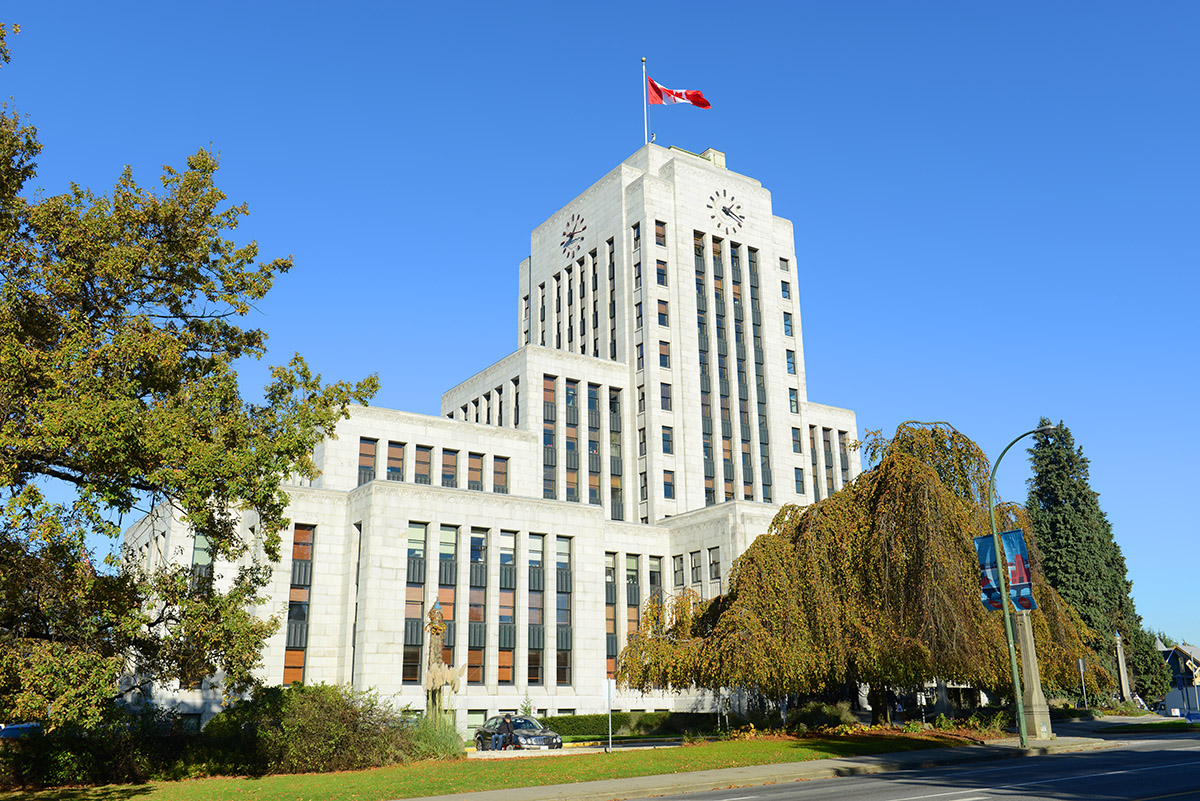
Vancouverites went to the polls last month to elect their new mayor and municipal representatives to help shape the city’s political future.
However, as voters across the city cast their ballots during the Oct. 21 election, campus residents were relegated to watching the democratic process unfold from the sidelines.
With the exception of Vancouver School Board trustee elections, residents living in the university neighbourhoods cannot vote in Vancouver’s municipal elections as the Point Grey campus falls outside of Vancouver’s municipal jurisdiction.
Green Party candidate Pete Fry was elected as the city’s new mayor, alongside other candidates from the Green Party and COPE – a municipal political party. The results marked a significant shift in the city’s municipal government and ended four years of rule by ABC Vancouver under outgoing Mayor Ken Sim.
For resident Andrew Giesbrecht, the election results were welcome but also exposed a grievance with municipal politics.
“Any change would have been a good change,” he said, before lamenting his ineligibility to vote in Vancouver’s municipal elections.
Giesbrecht said his workplace hosted municipal voting this year, and part of his job was to encourage community members to participate.
“I was on one hand telling people how they have a voice and should go vote, while on the other hand not being able to vote myself,” he said. “It was very disconnecting. I felt like, ‘Oh, I’m not really a part of what’s going on.’”
Campus residents like Giesbrecht are ineligible to vote in Vancouver’s municipal elections due to a jurisdictional dispute from a century ago between the province and the former municipality of Point Grey, which at the time included lands that would eventually become part of UBC.
Failure to resolve the dispute at the time resulted in the area being removed from Vancouver’s jurisdiction and coincided with the incorporation of the Municipality of Point Grey into the city in 1929.
For Giesbrecht, UBC’s continued separation from Vancouver does not make sense.
“UBC is for all intents and purposes a part of Vancouver and is so closely connected to everything that happens. I shop in Vancouver, I work in Vancouver and I use Vancouver Transit to get everywhere,” he said.
Jamie Lauzon, another campus resident, shared a similar sentiment.
“UBC isn’t just home to students. There are families, retirees, homeowners, businesses and community hubs here. There are thousands of permanent residents living here. How can none of us be represented?” he said. “If the mayor of Vancouver doesn’t represent us, then who does? There’s no mayor of UBC.”
On campus, residents can vote for political representation by electing directors to sit on the board of the UNA. The UNA isn’t an official government, but it is classified as a non-profit society tasked with providing municipal-like services while representing residents on issues concerning cultural programs, community centres, landscaping, and parking enforcement.
While the UNA communicates residents’ concerns to UBC officials, the university is not obligated to follow through on any feedback or recommendations put forth by elected directors of the UNA.
The unique jurisdictional arrangement of UBC’s Point Grey campus briefly made its way onto the campaign trail.
Kareem Allam — a mayoral candidate and leader of the city’s municipal Liberals Party — made a pledge to incorporate campus and the University Endowment Lands into Vancouver’s municipal boundaries if elected. Allam went on to receive roughly 5 per cent of the vote, coming in fourth place.
UBC undergraduate student Solomon Yi-Kieran was elected to council under the COPE banner in the Oct. 21 vote and became the youngest person ever elected to Vancouver city council.
In an interview with The Campus Resident, they said the jurisdictional issue and the Vancouver Liberals proposal wasn’t widely discussed on the campaign trail.
“I think it’s definitely something worth considering,” Yi-Kieran said. “But I definitely don’t think it was a major election issue. I don’t think it was front of centre for people’s minds either in the city of Vancouver or in Electoral Area A.”
Despite the Vancouver Liberals’ proposal not gaining traction during the election, being ineligible to vote in Vancouver’s elections will continue to be an issue for campus residents like Lauzon.
“It was disheartening to talk to my neighbours during the election,” he said. “It’s not just that we feel unrepresented, we feel invisible and vulnerable. It feels like we don’t count. And it feels like we’re not heard.”
EMBER THOME IS AN UNDERGRADUATE STUDENT MAJORING IN INTERNATIONAL RELATIONS AND MINORING IN JOURNALISM. IN HER SPARE TIME, EMBER CAN BE FOUND READING A COMIC BOOK WITH HER CAT ARLO SITTING COZILY IN HER LAP.