
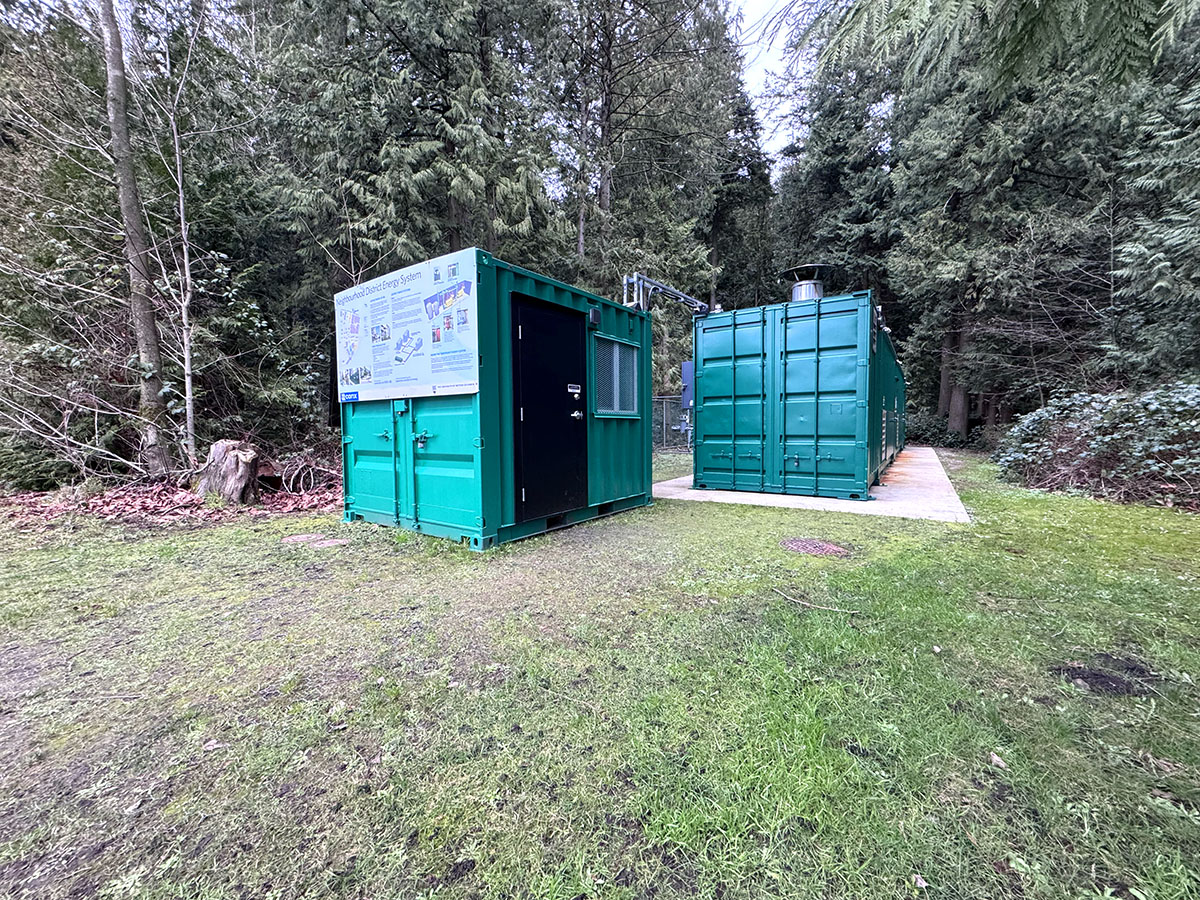
Recently approved double digit annual rate increases in heating and hot water rates for Wesbrook Place residents have community members and campus stakeholders questioning the financial viability and environmental credentials of the neighbourhood’s energy system.
In October last year, the British Columbia Utilities Commission (BCUC) approved an application by energy company Corix Utilities to increase their rates by a range of 12 to 18 per cent annually for 2025, 2026, and 2027. The company said the rate increases were necessary to address revenue shortfalls from the natural gas-powered Neighbourhood District Energy System (NDES) it operates in Wesbrook Place.
With the application approved, Wesbrook residents in 15 residential buildings are facing a 50 per cent increase in their heating and hot water rates over the next three years. The application by Corix to raise rates was met by wide opposition from residents, with the regulator receiving 123 letters of comment from residents, strata representatives, and the UNA.
Many described the adverse financial impact of the rate hikes. Some critics have questioned the system itself.
In an official comment sent to the provincial regulator during its review process for Corix‘s rate increase application, an official from UBC Properties Trust (UBCPT) questioned the current and future financial viability of the energy system for ratepayers.
“The Corix NDES is an inefficient legacy system with no reasonable plan to transition to a low-carbon fuel source without unacceptable costs that would need to be recovered through future rate increases,” UBCPT Director of Planning and Design Paul Young wrote in his submission to the BCUC.
“The Corix gas-fired NDES system should be abandoned and connected buildings should be retrofitted with heat pumps in place of the current heat exchangers.”
In his submission, Young said that as of February 2025, UBCPT has built and operates 881 units of rental housing connected to the NDES. A total of 1,744 condominium units in Wesbrook Place are also connected to the system, he added.
Erica Frank, a campus resident and UBC professor who served as a UBC Sustainability Initiative Fellow, has also questioned the environmental credentials of the system as touted by UBC and Corix.
Writing to The Campus Resident, Frank described claims about the system’s sustainability as “textbook greenwashing”.
“It’s hard for me to imagine a worse solution to this problem than a methane (natural gas) rate increase, a solution that more effectively violates UBC’s and UBCPT’s ostensible ‘dedication to creating vibrant, sustainable communities on campus that serve the University of British Columbia and beyond’,” said Frank.
Despite the critiques, campus officials say there are no plans to switch to an alternative system.
When asked about Young’s comments to the provincial regulator, a spokesperson from UBC Properties Trust said, “UBC has a long-term contract with Corix, and as part of that agreement, new buildings within the service area are required to connect to the Neighbourhood District Energy System (NDES).”
“Within that framework, UBCPT continues to develop buildings that are energy-efficient using UBC’s REAP (Residential Environmental Assessment Program) as a sustainability standard for residential buildings,” the spokesperson added.
Those comments were echoed by UBC’s Director of University Affairs Matthew Ramsay.
“As part of its commitment to sustainability, UBC partnered with Corix to implement and operate a Neighbourhood District Energy System (NDES) in 2014 to deliver space heating and domestic hot water to UBC’s residential neighbourhoods,” he told The Campus Resident.
“Corix was chosen in a competitive bid process based on their established expertise and track record of successful community partnerships for energy and utility systems.”
EMMANUEL SAMOGLOU IS THE MANAGING EDITOR OF THE CAMPUS RESIDENT.