
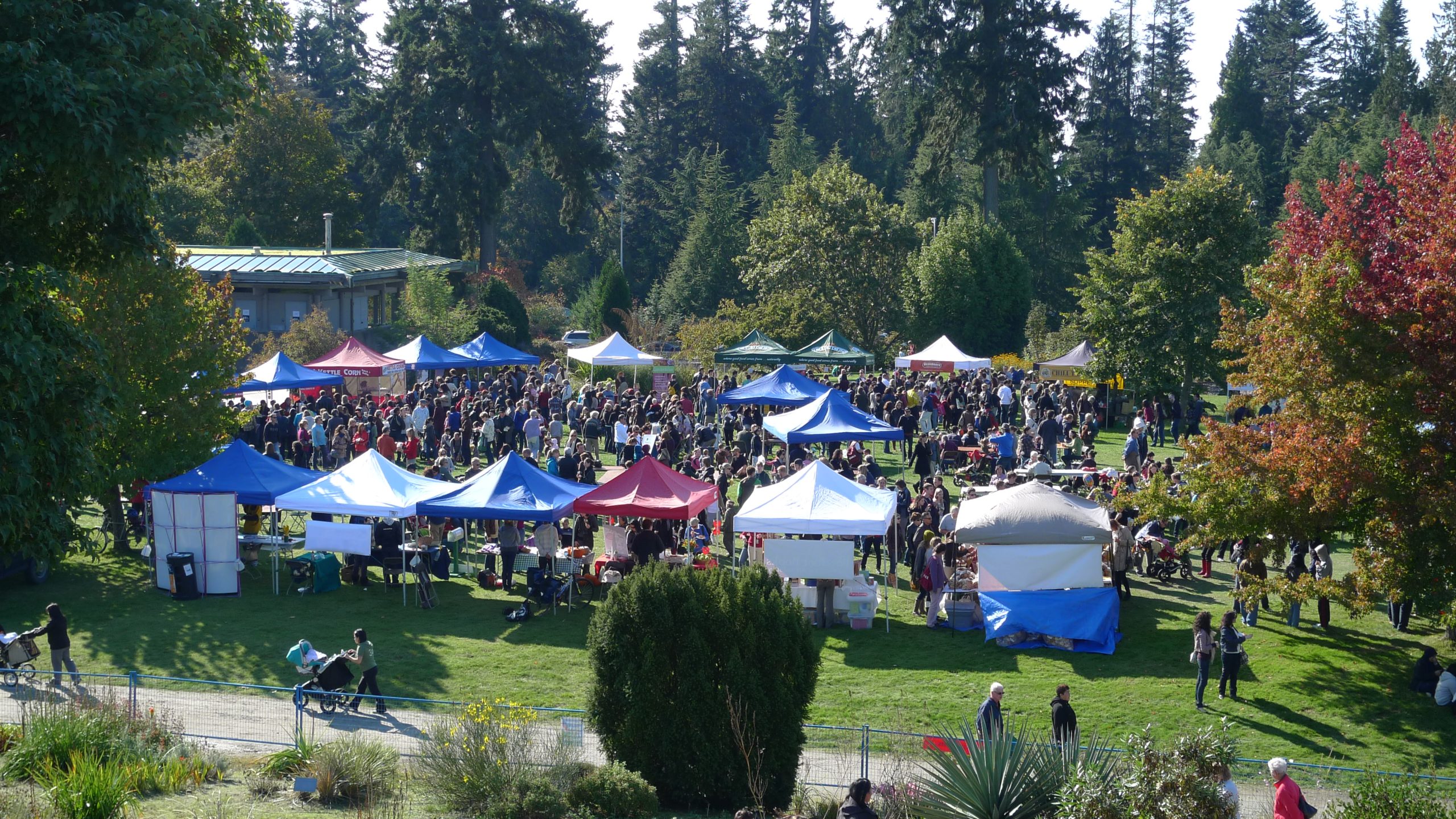
I had heard about the Apple Festival for years, but for some reason the timing was never right.
But when my girlfriend Allison – a committed horticulturalist and accomplished gardener – told me she was volunteering at the event, I committed to finally go, and I have no regrets. The 35th Annual Apple Festival at UBC Botanical Garden did not disappoint.
At this year’s event, held from October 17-18, there were over 60 varieties of apples and pears on offer.
Over the years, the festival has also expanded beyond fruit. This year the Gardens introduced a small area for potatoes, where organic heritage potatoes were available in addition to the more well-known varieties. The organizers feel their remit is to educate as well as to encourage consumption, and with the current interest in food diversity, they seemed to have achieved this objective. The inspiration for the inclusion of potatoes, specifically, is of course their French name, which translates in English to “apples of the earth”.
A few days prior to the event I went to the UBC Botanical Garden website to buy a ticket, but found all the apple tasting tickets were sold out. This told me it was going to be popular. And on a perfect October weekend, with balmy temperatures and blue skies, it sure was busy, especially in the area where the apples were sold.
I entered at the parking lot and initially thought, “Is this it?”. Apart from a few food trucks, the area was full of boxes of apples behind plastic bags full of different varieties on large tables available for purchase.
I was told 26,900 lbs of apples and 2,100 lbs of pears were sold – that’s over three tonnes of fruit, all grown in B.C. I arrived only two hours after the festival had opened and already certain varieties had sold out. A total of 228 apple pies and just under $4,000 worth of dried flowers were also sold. All these figures set records.
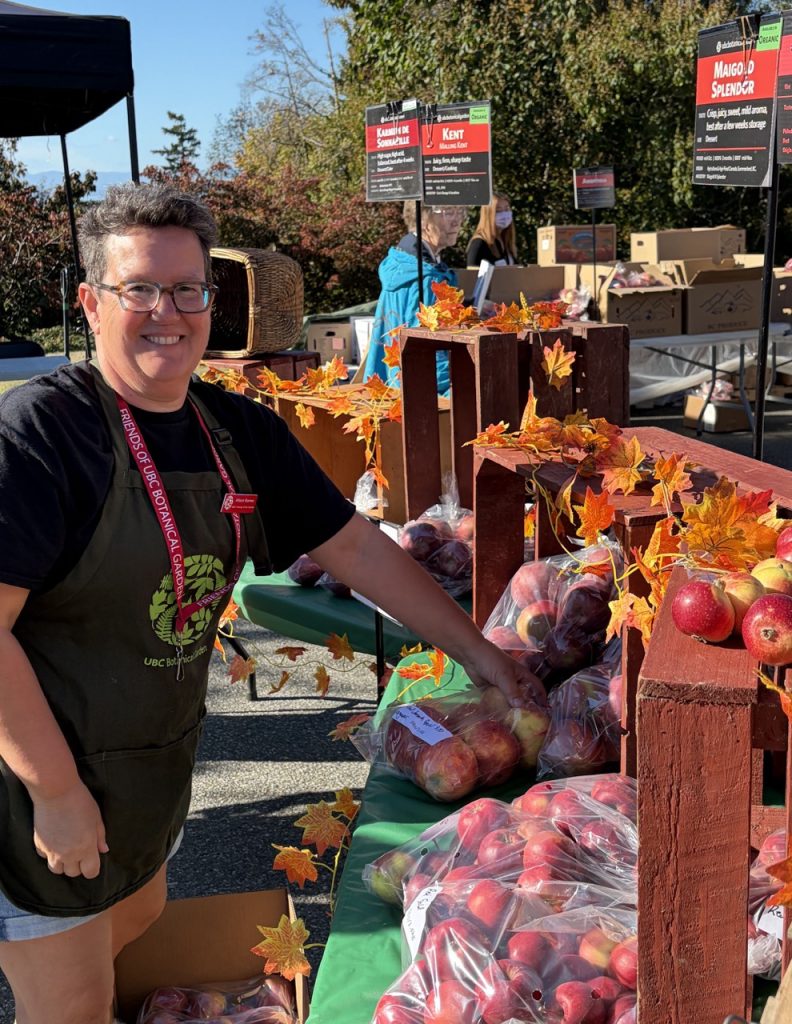
Strolling around, I came across an area where you could buy an apple or pear tree. It was possible to speak to experts about how to pick, prune, grow and position them, and how to get the best produce.
I found my friend Allison and quickly learned the festival was not limited to the parking lot as I had mistakenly thought, but actually extended into the gardens themselves. And this was where the action was.
Like all 600-plus festival volunteers, Allison was too busy to entertain me, so I set off to explore by following the bright red signs.
I had heard the largest pile of leaves in the entire province was at the festival for enthusiastic attendees to jump in. This idea was unique and found that it attracted the very young, who seemed to be having great fun.
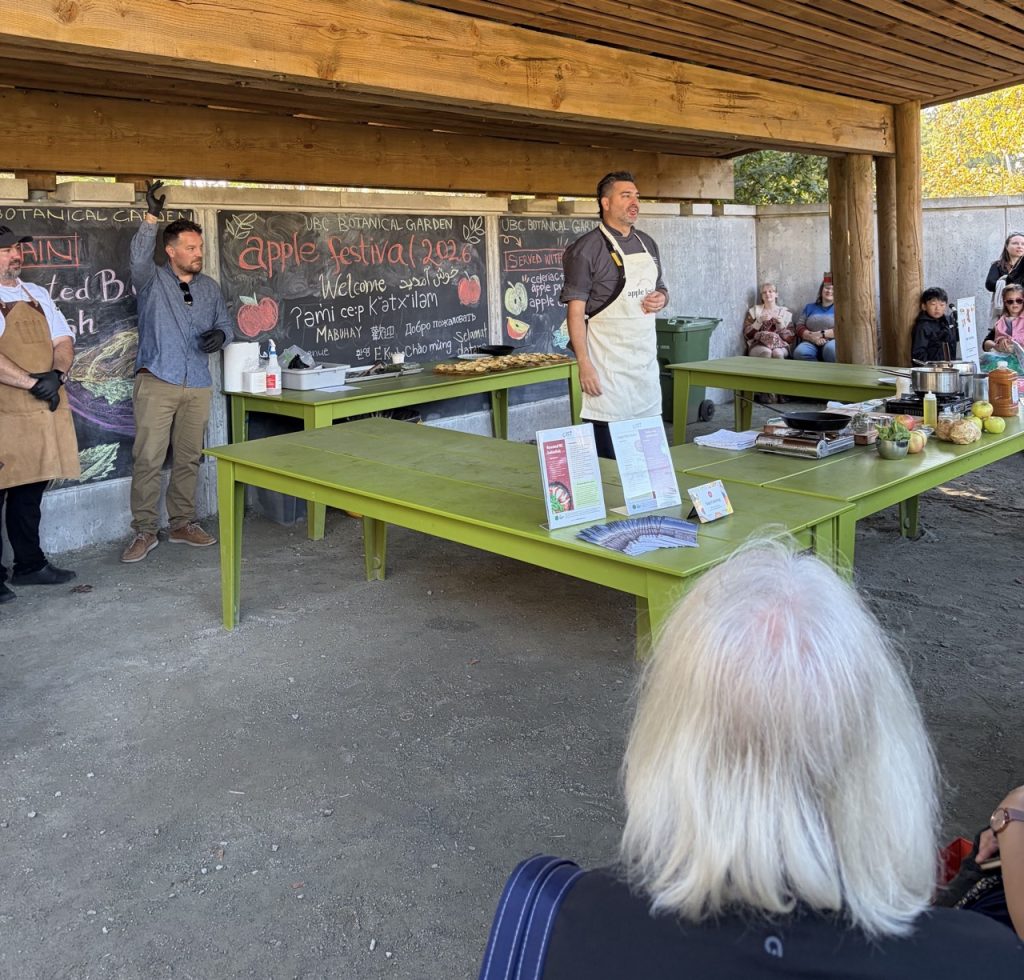
Moving on, I saw a cooking demonstration underway. Under a tent, a charming presenter and a couple of assistants made dishes featuring apples. Further, I found at least twenty vendors, some selling apple-related products such as jellies and ciders, and others peddling chocolates and tea towels.
Finally, I stumbled on the always popular Tasting Tent, and it was packed. There was even security at the entrance to ensure unruly behaviour was kept to a minimum. I knew I was going to miss out as I had already found out tasting tickets were sold out, but clearly anyone who had been at festival in previous years knew where the honeypot was located. I found out over 2,800 adults and children had a chance to taste the dozens of varieties of apples on display.
In total, 9,401 people attended the two-day festival. If that is not successful, I don’t know what is.
JAYNE SEAGRAVE IS A B.C. RESIDENT AND BEST-SELLING AUTHOR OF “CAMPING BRITISH COLUMBIA, THE ROCKIES AND THE YUKON”. SHE SPENDS HER FREE TIME TRAVELLING, WRITES FICTION AND NONFICTION, AND OCCASIONALLY TEACHES WRITING AND PUBLISHING COURSES.